A bi-energy system pairs an electric heat pump with a fuel-burning furnace and moves between the two automatically as the weather changes. The heat pump handles the house for most of the heating season. When winter turns genuinely cold, the furnace takes over. You never touch a switch.
How does bi-energy actually work?
Think of it as one heating system with two engines. The heat pump is the efficient everyday option and does the great majority of the work through fall, winter and spring. The furnace sits in reserve for the coldest stretches. A control ties them together so only one runs at a time, and the handover happens on its own.
Because the heat pump is doing the bulk of the heating, it is worth understanding what it is actually doing. We cover that in how a heat pump works. The short version is that it moves heat rather than creating it, which is why it can deliver more energy into your home than it draws.
Why does the system switch to the furnace at all?
Not because the heat pump has given up. This is the part most homeowners have backwards. A modern cold-climate heat pump keeps producing usable heat in deep winter, and many Quebec homes run one all season with no furnace at all. We look at where the real limits sit in our guide to central heat pumps in a Quebec winter.
The switch is about how your electricity is priced. Hydro-Québec offers a dual-energy rate designed for homes set up this way, and the economics of that rate change once the weather gets cold enough. A bi-energy system is built to follow those economics automatically, so the furnace picks up the load at the point where burning fuel makes more sense than buying electricity.
How does it know when to switch?
The utility tells it. The changeover is triggered by an outdoor temperature signal rather than by anything you set on the thermostat. When conditions cross the point defined by the rate, the system moves to fuel, and it moves back to the heat pump once the cold spell passes.
That automatic changeover is a requirement of the rate rather than an optional convenience, which is why a bi-energy installation has to be set up to receive and act on the signal. It is one of the details worth getting right at installation, because a system that cannot switch properly will not qualify.
What can be paired together?
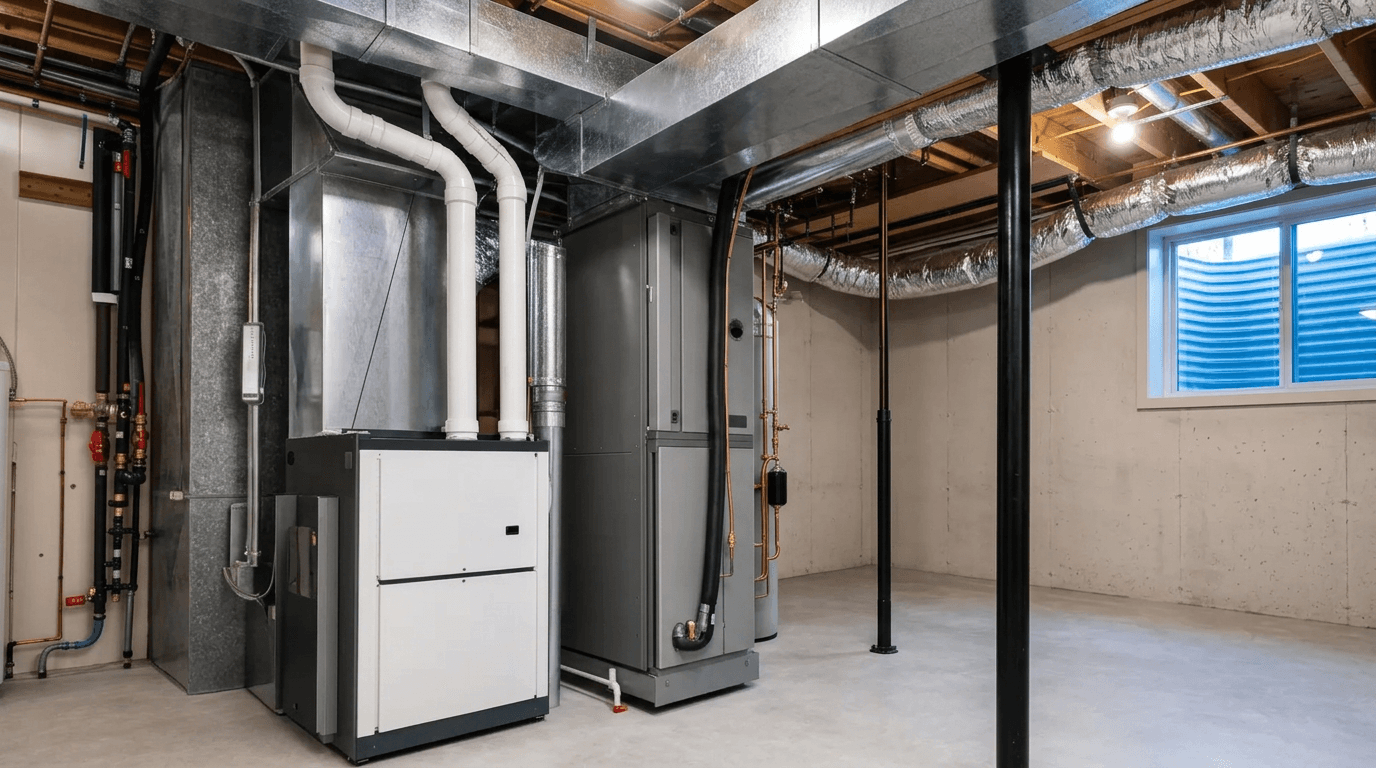
The electric side is usually a heat pump. That can be a central ducted heat pump or a geothermal system, depending on the house. The fuel side is normally an existing furnace, and several fuel types are accepted.
Sizing matters more than most people expect. The fuel side has to be capable of heating the home on its own during a cold spell, and the system as a whole has to be properly matched to the house rather than assembled from whatever is already in the basement. Our central heat pump buyer’s guide explains how that sizing work is done and why it decides whether the result performs.
Is bi-energy right for your home?
It fits most naturally when you already have a fuel furnace. If your house runs on gas or oil and you are adding a heat pump for efficiency in the shoulder seasons and cooling in summer, bi-energy is usually the configuration that falls out of it. The furnace you already own stays useful and earns its keep on the coldest nights. If you would rather be finished with oil altogether, converting the furnace to a heat pump is the other route.
If you heat with electricity today and have no fuel service, going bi-energy means bringing fuel to the house. In that case an all-electric cold-climate heat pump is often the more direct route, and our guide to converting to electric heating covers what that involves. If you are weighing the options more broadly, our comparison of home heating methods is a good place to start.
What does it cost to install?
Financial assistance is available for this kind of upgrade. Programs from the Québec government and its energy partners are aimed specifically at dual-energy conversions, and the dual-energy rate itself is designed to keep returning value every month you heat.
What you qualify for depends on your house, your current equipment and the work involved, so it is worth confirming before you commit. We keep an up-to-date summary in our guide to government HVAC grants in Quebec, and we can tell you which programs apply to your project. Spreading the balance is straightforward as well: see our financing options.
What about maintenance?
A bi-energy setup is two heating systems, and both need looking after. We recommend two maintenance visits a year: one before the cooling season and one before the heating season, so the heat pump and the furnace are each checked before the weather leans on them.
The furnace deserves particular attention here. It sits idle for months and is then asked to carry the whole house on the coldest night of the year, which is the worst possible moment to discover a problem. How to prepare your furnace for winter covers what we check, and what normal HVAC maintenance includes sets out the full annual routine.
Talk it through with us
Bi-energy suits some homes very well and is the wrong answer for others, and the deciding factors are usually the furnace you already have and how your house is set up. We install and service bi-energy systems across Montreal and Laval, and we are happy to look at what you have before recommending anything. Get in touch and we will walk you through it.