The answer depends on several factors particular to your situation, so start with four questions before you compare any equipment: Our five questions to answer before choosing a heating system work through the same ground in more detail.
• Are you thinking of converting your heating system entirely, or improving what you already have? If you are coming off oil or gas, start with converting to electric heating in Quebec.
• What budget are you prepared to put into the new installation?
• How much weight do you give to the energy efficiency of the system?
• How soon do you expect to sell the house?
Geothermal: the most efficient option, and the largest investment. The most ecological choice, and an increasingly sought-after one in Quebec. It asks for a significant investment up front, and in return it delivers the lowest running costs of anything on this list. Those savings accumulate year after year, and the installation earns that money back over a long stretch of ownership. It is the strongest option if you plan to stay in your home, and the longer you stay, the more it returns. Our article on what a geothermal installation costs in Quebec and what it returns sets out the current price range and the payback, and our geothermal systems page covers what installing one involves.
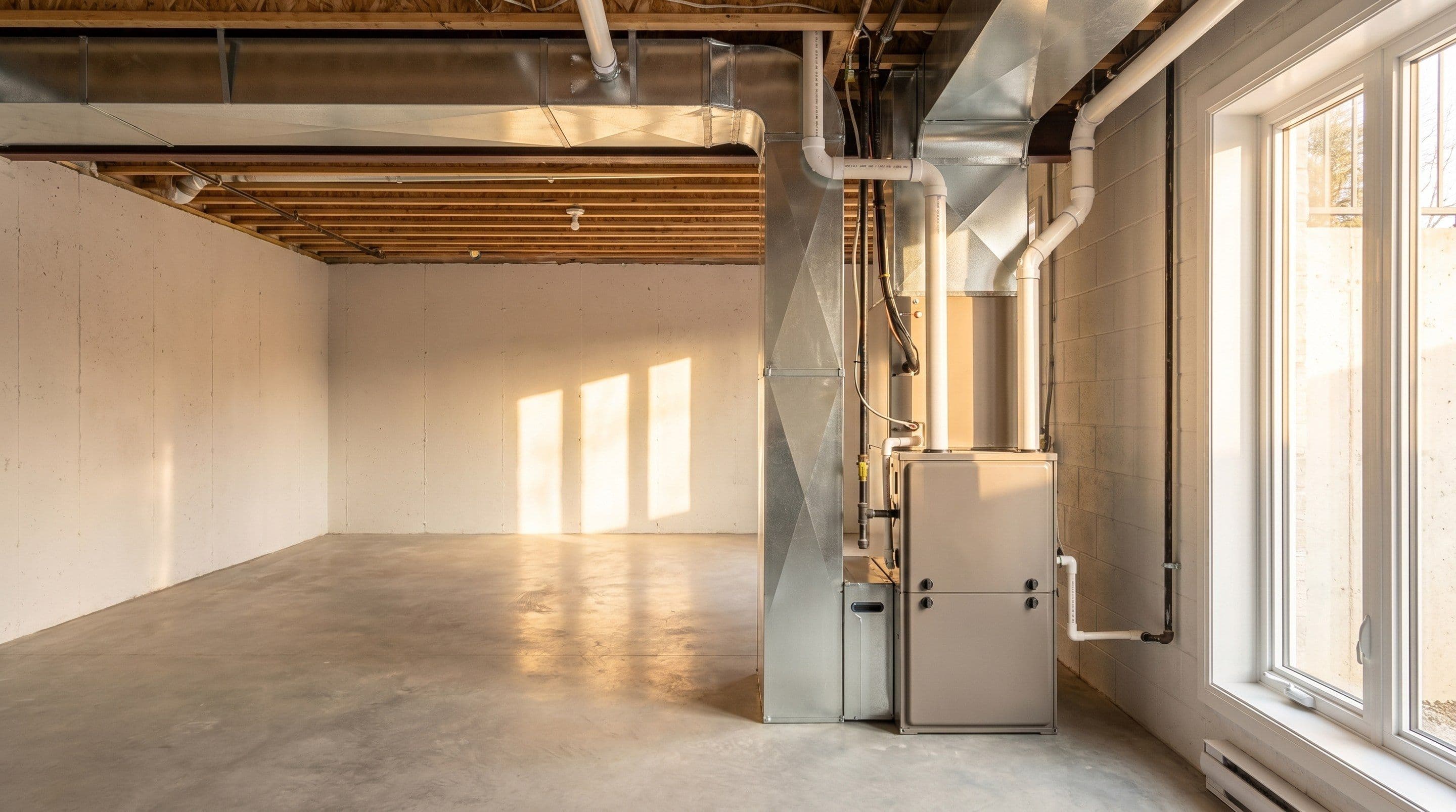
Forced air: even heat, better air, regular upkeep. Powered by electricity, by gas, or in bi-energy mode, a forced-air system heats air and distributes it through the whole house via a duct circuit. It is efficient, it can carry air treatment on the same ductwork (filtration, humidification, ventilation), and two service visits a year keep it performing. One clear advantage over electric baseboards is that the air is far less dry. A well-installed system lasts 25 to 40 years, and some bi-energy configurations qualify for Hydro-Québec’s reduced dual-energy rate, which is where a good part of the running-cost saving comes from.
Before you replace anything, look at the envelope. Heating alone accounts for more than half of a Quebec home’s energy consumption, so the building envelope decides how much of that you waste. Poor attic and foundation insulation can account for heat losses of up to 40%. Fixing that is almost always cheaper than buying a bigger system, and it makes whatever system you choose cost less to run: Our article on three heating mistakes that get expensive covers the ones we see most often.
• Caulk carefully around windows, doors and the fireplace, and anywhere else air gets in. It is an inexpensive measure and it shows up on the bill.
• In winter, let the sun in through the windows on the sunny side, and close curtains or blinds on the windows that get no direct sunlight.
• Check and correct your insulation, particularly on the north side and on the side the prevailing winds come from.
In the end it is a heating professional’s assessment of your particular home that points to one option over another. Talk to our specialists and we will help you make the decision that fits your case.