Three devices get recommended for the same complaint, and they do completely different things. An air exchanger replaces the air in your house. A humidifier changes what is in it. A filter takes things out of it. Pick the wrong one and the problem you were trying to solve is still there in February, which is the usual reason people end up owning two.
Start with the symptom, not the device
Almost every air quality call starts with something somebody noticed rather than something they measured, and naming it precisely is most of the work. Each symptom points at a different machine.
Air that feels stale or heavy by the end of the day, windows that fog on the inside, cooking smells that hang around: that is a ventilation problem. Static shocks, dry skin and sinuses, gaps opening up in hardwood: that is a humidity problem. Dust settling again a day after you cleaned, allergies that are worse indoors than out, a shedding pet: that is a filtration problem.
Two of those look alike from the inside, which is where most of the wrong purchases come from. Fogged windows feel like a humidity complaint, and they are one, but almost always too much humidity rather than too little.
An air exchanger replaces the air
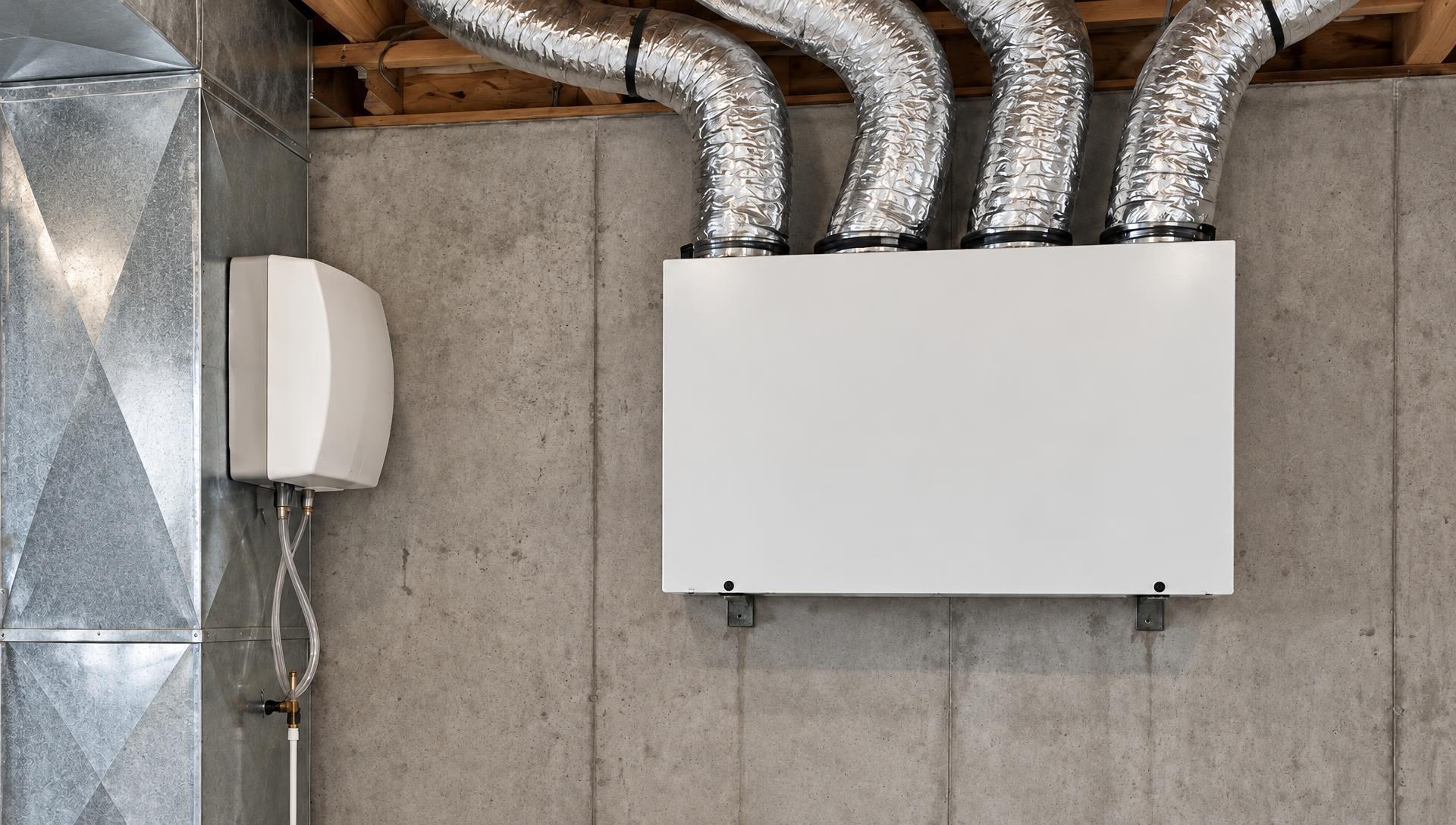
An air exchanger runs continuously, pulling stale indoor air out and drawing fresh outdoor air in, passing the two streams through a core so the heat in the outgoing air is recovered instead of thrown away. It is the only one of the three that removes anything from the house and the only one that brings anything new in. How we approach air exchanger installation covers the equipment side.
This matters more than it used to because houses are built tighter than they were. A well-sealed home closed up for seven months has nowhere to put the moisture from showers and cooking, the compounds that come off finishes and cleaning products, or the carbon dioxide from the people living in it. Older, draughtier houses ventilated themselves by accident. Newer ones do not, and that is by design rather than a fault.
If your windows fog on cold mornings, this is the device that addresses it.
A humidifier puts moisture back
Cold outdoor air holds very little moisture, and once it is warmed to room temperature the relative humidity falls further. That is why a house can feel parched in January without anything being wrong with it. Most guidance puts the winter target somewhere around 30 to 40 percent, and below that you get static, dry sinuses, and wood floors and furniture that shrink and crack. A whole-home humidifier mounts on the ductwork and treats the whole house rather than one room at a time.
The setting matters as much as the machine. It should come down as the weather gets colder, because a level that is comfortable in November will put condensation on the windows in January. If you already have fogging, a humidifier is the wrong answer and will make it worse.
A filter or air purifier removes what is floating in the air
The filter in your furnace or air handler is already doing this job, and moving to a higher-grade medium captures finer particles: dust, pollen, dander, mould spores. The rating is the thing to get right rather than the brand. A filter denser than the system was designed around restricts airflow, which costs you efficiency every hour it runs and can push a heat pump onto its backup heat, so the rating has to match the equipment rather than being as high as the shelf allows. The filters we supply are matched that way.
Houses without ductwork, on baseboards or a ductless system, have nowhere to put a central filter, and that is where standalone purifiers earn their place. Our piece on indoor air quality goes through furnace filters, HEPA and UV-C in more detail than there is room for here.
They are not substitutes, and two of them pull against each other
A humidifier does nothing about stale air. An exchanger captures no dust. A filter changes neither the freshness of the air nor its moisture. Each one is the only fix for its own problem, which is why swapping one in for another leaves you with the original complaint and a new appliance.
The interaction worth knowing before you buy: an air exchanger brings in cold outdoor air that is very dry once warmed, so running one through the winter lowers indoor humidity. If you have both, they are working in opposite directions, and the balance between them is a settings question rather than a sign something is broken. Adding an exchanger to a house that already has a humidifier usually means re-tuning the humidifier, not removing it.
Matching the device to your house
A tightly built or recently renovated house where the air feels stale and the windows fog: start with the exchanger. An older, draughtier house where winter air feels dry and static follows you around: the humidifier, because the draughts are already doing the ventilating. Allergies, pets or visible dust in a house with ducts: filtration, and settle the rating before the device. No ducts anywhere: a standalone purifier for particles, with ventilation handled by an exchanger or by opening windows.
Most houses here need one of the three rather than all of them, and which one is usually obvious once the symptom is named properly. Whichever you add becomes part of what gets serviced: two visits a year, one before the cooling season and one before the heating season, with filters and humidifier pads checked in between. Our protection plan covers both visits, and the fall checklist has the seasonal jobs you can handle yourself.
Talk it through with us
If you are not sure which symptom you actually have, that is a reasonable thing to get a second opinion on before spending anything. Get in touch and we will look at how the house is built, what the humidity is actually doing and what you have noticed, then tell you which of the three is worth it. We work across Montreal and Laval, and if the answer is that you do not need any of them, we will tell you that too.