Among the most efficient heating systems available today, if not the best, are water-to-air and water-to-water geothermal heat pumps. They keep a home’s temperature steady and adjustable while using a fraction of the energy older systems needed, and in Quebec, where electricity is comparatively affordable, that shows up directly on the bill.
How a heat pump works. A heat pump is an electric system whose job is to move warm air from one place to another. This transfer is made possible by a refrigerant and two coils: the refrigerant evaporates in the first coil, absorbing heat from the ambient air, then travels to the second, where it condenses and releases that heat. Although simple, this system based on the properties of a refrigerant under varying pressure is very efficient. Heat pumps are nothing new in Montreal; they are a popular solution in Canadian homes. What has changed is their performance, which has been pushed further with the development of geothermal systems.
What geothermal changes. While keeping the same operating principle as central heat pumps, geothermal heat pumps stop drawing heat from the outside air and instead draw it from the ground, through a network of liquid-filled pipes buried in the soil. Unlike the air, the ground holds a constant temperature of about 10°C, which means more heat is available at all times, and therefore higher efficiency. Better yet, in cooling mode, the warm air the heat pump extracts from your home is no longer lost outdoors: it is sent into the ground and stored for the next cold season.

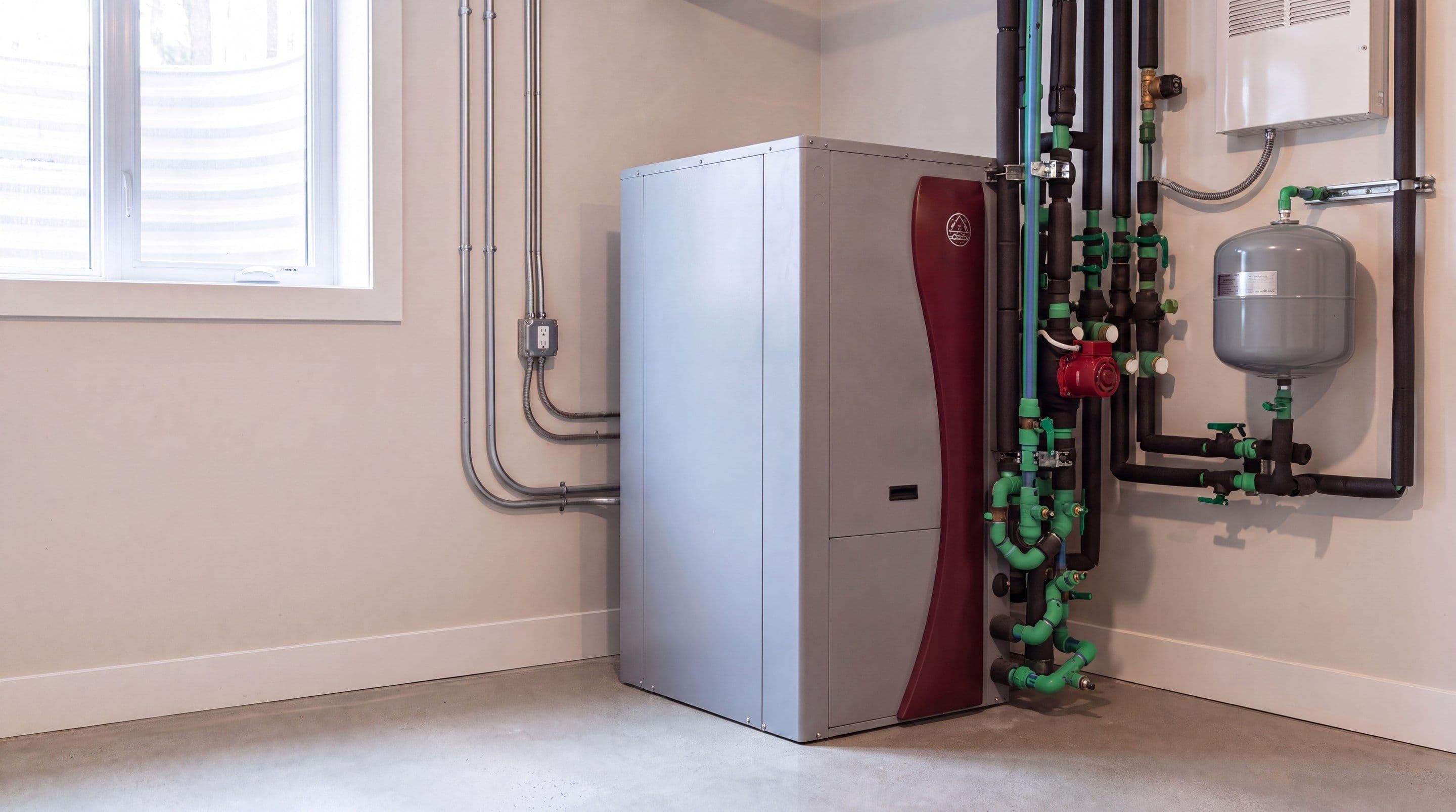
Water-to-air and water-to-water. The two types differ in what they do with the heat once they have it. A water-to-air system releases it into the rooms as warm air, the way a conventional central system does. A water-to-water system uses it to heat water instead, which then circulates through radiators, heated floors or baseboards.
That second type reaches even higher energy efficiency, up to 5 units of heat per unit of electricity or potentially 500%, though it costs more to install. Our flagship products are the WaterFurnace 5 Series forced-air geothermal heat pump and the Envision NSW and NDW hydronic heat pumps.
What you get with WaterFurnace. Whichever you choose, you get the guarantee of WaterFurnace technology, with multiple advantages including:
• Energy savings: WaterFurnace geothermal heat pumps convert one unit of electrical energy into 4 to 5 units of thermal energy, for a potential efficiency of 500% compared with older systems.
• Money savings: over the long term, lower electricity bills mean a heat pump saves you a significant amount, and geothermal installations can qualify for government rebates.
• Clean air: high-quality heat pump filters let you breathe healthy air, free of dust and pollen. More on that in why indoor air quality matters.
• Environmentally friendly: no on-site combustion, so no flue gases, no fuel deliveries and no combustion by-products.
• Versatility: a single system provides heating, air conditioning and water heating.
• No combustion, and no carbon monoxide risk, unlike gas-fired systems.
• Durability and reliability: these systems are among the most robust available, with a lifespan of up to 20 years and more.
Our specialists will be happy to walk you through all the technical details of these systems and tell you whether your lot suits a ground loop. Contact us today.